
From screwball heroines to the character who gave the trope its name, ranking cinema’s most unforgettable free spirits.

She Had Us at Hello
She blows into his life without warning. She’s funny, impulsive, a little eccentric and almost impossibly charming. While he’s busy brooding over everything that has gone wrong, she reminds him that life might actually be pretty wonderful. Before long, his carefully ordered world has been turned upside down—and he’s usually better for it.
She is the Manic Pixie Dream Girl.
Film critic Nathan Rabin coined the term in 2007 while looking back at Kirsten Dunst’s Claire Colburn in Elizabethtown (2005). Claire is an exuberant flight attendant who enters the life of Drew Baylor at precisely the moment he has hit bottom. She talks, she listens, she sends him on an adventure and, most importantly, she helps him rediscover a reason to embrace life.
The label eventually became less affectionate. At its most critical, “Manic Pixie Dream Girl” describes a female character who exists primarily to rescue a troubled male protagonist from himself. She can be quirky without being complicated, fascinating without having much of an inner life of her own. When poorly written, she risks becoming less a person than a male fantasy wearing an adorable outfit.
But that isn’t the whole story.
Played well—and more importantly, written well—these characters can be some of the most memorable women in movie history. Their exuberance is infectious. Their femininity can coexist with intelligence, vulnerability, confidence and contradiction. The best of them don’t simply brighten the lives of the men around them. They take possession of the screen.
And Claire Colburn certainly wasn’t the first.
Long before anyone had a name for the archetype, Katharine Hepburn was dragging Cary Grant and a leopard through one glorious catastrophe after another in Bringing Up Baby. Marilyn Monroe’s Sugar Kane captivated two musicians hiding from the mob in Some Like It Hot. Audrey Hepburn made Holly Golightly simultaneously worldly and wonderfully vulnerable in Breakfast at Tiffany’s. Diane Keaton turned Annie Hall into one of the defining characters of 1970s cinema.
The Manic Pixie Dream Girl, it turns out, had been hiding in plain sight for generations.
For this ranking, I’m looking beyond the familiar definition to celebrate the characters who best embody the spirit of the archetype: likable, exuberant, distinctly feminine women whose arrival changes the emotional trajectory of the people around them. Some fit the definition perfectly. Others helped establish its cinematic DNA decades before the phrase existed.
So, from screwball comedy to modern romance, here are The Top Ten Manic Pixie Dream Girls in Movie History.
🎬 Love Talking Movies?
If rankings like this are your kind of movie conversation, subscribe to A Cute Film Addict. You’ll get the latest Top Ten lists, The Daily Rewind, movie features and more delivered straight to you. Come for the movies, stay for the debate over who should have made the list.
Affiliate Disclosure: Some links in this article are affiliate links. As an Amazon Associate, I earn from qualifying purchases. If you make a purchase through one of these links, I may earn a small commission at no additional cost to you. Your support helps keep A Cute Film Addict running and allows me to continue creating movie guides, rankings and features. Thank you for supporting the site!
Want all ten movies in one place? I’ve created a Letterboxd companion list featuring every film in the countdown, from Garden State to Annie Hall. View the Complete Letterboxd List →
With the definition established, it’s time to meet the women who brought the archetype to life. The ranking considers box-office success, critical and audience reception, awards recognition and, yes, a little old-fashioned eye test. We’ll start with a character who arrived just before the Manic Pixie Dream Girl finally had a name.
Here are The Top Ten Manic Pixie Dream Girls in Movie History, beginning with number ten.
10. Sam — Garden State (2004)
Played by Natalie Portman

If you were asked to picture a Manic Pixie Dream Girl without actually using the phrase, Sam from Garden State might be pretty close to what comes to mind. She’s eccentric, impulsive, relentlessly talkative and seemingly capable of finding amusement in almost anything. She meets Andrew Largeman at exactly the moment his life has become emotionally numb, and almost immediately begins pulling him back toward the world.
Andrew, played by Zach Braff, returns to his New Jersey hometown after the death of his mother. He has spent years medicated on antidepressants and other drugs prescribed by his psychiatrist father, and he moves through the opening stretch of the movie as though life is happening somewhere just beyond his reach. Then he meets Sam in a doctor’s waiting room, and silence suddenly becomes considerably harder to maintain.
Natalie Portman gives Sam an irresistible nervous energy. She talks about being a pathological liar, invents little stories, makes strange noises and introduces Andrew to the wonderfully simple idea of doing something completely original—something no one in the history of the world has ever done before. On paper, those quirks could feel assembled from a screenwriter’s checklist. Portman makes them feel spontaneous.
That distinction matters. Sam could easily have become exactly what critics of the Manic Pixie Dream Girl object to: a collection of adorable eccentricities conveniently placed in the path of a melancholy young man. Instead, Portman finds vulnerability underneath the performance. Sam’s cheerfulness doesn’t mean she has everything figured out. She has epilepsy, lives at home with her mother and adopted brother, lies when she doesn’t need to and carries insecurities that gradually peek through all that exuberance.
Her relationship with Andrew works because she represents almost everything he has denied himself. Sam feels things openly. Andrew barely feels anything at all. She laughs loudly, cries freely and seems perfectly comfortable looking ridiculous. For a man who has spent much of his adult life emotionally anesthetized, simply being around someone that alive becomes transformative.
And that’s where Sam earns her place on this list. She doesn’t fix Andrew’s problems, nor does falling in love magically erase the years of grief and resentment he has avoided confronting. What she does is remind him that experiencing those emotions is preferable to feeling nothing. Sam opens the door, but Andrew ultimately has to decide whether he’s willing to walk through it.
There is also something historically fascinating about Garden State. The movie arrived in 2004, only a year before Kirsten Dunst’s Claire Colburn appeared in Elizabethtown, the character who would inspire critic Nathan Rabin to coin the term Manic Pixie Dream Girl. Looking backward, Sam seems almost like the archetype waiting for somebody to give it a name.
Nearly everything associated with the term is here: the quirky mannerisms, youthful femininity, infectious enthusiasm, unexpected romance and emotionally stalled male protagonist suddenly encouraged to participate in his own life. Yet Portman’s performance gives Sam enough tenderness and uncertainty to suggest a person underneath the collection of quirks.
Sam may begin our countdown at number ten, but few characters better capture the particular moment in movie history when the Manic Pixie Dream Girl was about to become impossible not to notice. Andrew returns home believing he has come back to bury his mother and confront his past. Then Sam enters the picture and reminds him of something considerably more important—how it feels to be alive.
9. Allison — Yes Man (2008)
Played by Zooey Deschanel

If Sam arrived just before the Manic Pixie Dream Girl had a name, Allison arrived when Hollywood knew exactly what one looked like. Played with an appealing mixture of confidence, eccentricity and warmth by Zooey Deschanel, Allison is the wonderfully unpredictable woman waiting on the other side of Jim Carrey’s favorite word: no.
Carl Allen has become very good at avoiding life. Divorced, unhappy and increasingly disconnected from his friends, he spends most evenings alone watching movies rather than risking the inconvenience of actually doing something. Then a self-help seminar convinces him to start saying yes to every opportunity that comes his way. Naturally, one of those opportunities eventually leads him to Allison.
Their first meeting tells us almost everything we need to know about her. Carl finds himself stranded at a gas station after giving a ride to a homeless man, and Allison appears on a scooter to rescue him. She’s spontaneous, playful and immediately comfortable with a stranger who has absolutely no idea what to make of her. Before the night is over, she has given Carl a ride, shared an unexpected kiss and disappeared back into the night.
Allison only becomes more delightfully unconventional from there. She fronts an eccentric little band called Munchausen by Proxy, teaches a jogging photography class and seems willing to turn almost anything into an adventure. Deschanel was already becoming closely associated with the quirky, free-spirited screen persona, and Yes Man gives her plenty of room to lean into it. The bangs, the vintage clothes and the offbeat hobbies certainly help, but it’s her natural warmth that makes Allison more than a collection of carefully arranged eccentricities.
She also arrives at exactly the right moment in Carl’s life. Saying yes may have gotten him out of the apartment, but Allison gives all those new experiences an emotional purpose. She isn’t interested in carefully planning every moment or protecting herself from every possible disappointment. She wants to get on the scooter, take the photograph, sing the ridiculous song and find out where the road goes.
That makes Allison one of the clearest examples of the Manic Pixie Dream Girl’s traditional role. Carl has forgotten how to participate in his own life, and she shows him how much fun he has been missing. She doesn’t accomplish that with some grand philosophical speech. She simply lives differently, and Carl begins to realize he would like to live a little more like that himself.
Thankfully, Yes Man gives Allison enough self-respect to push back when Carl’s transformation goes too far. She doesn’t want a man who says yes because he believes the universe requires it. She wants him to choose her because he means it. That distinction gives the character a little more substance than the fantasy Carl initially sees and allows their relationship to become something closer to two people meeting in the middle.
There may be more complex characters ahead on this list, but few fit the recognizable image of the Manic Pixie Dream Girl quite as comfortably as Allison. She is quirky without being exhausting, feminine without being fragile and adventurous without seeming completely untethered from reality. Most importantly, Deschanel makes spending time with her feel like it might genuinely be fun.
Carl begins Yes Man sitting alone on his couch, perfectly content to let the world continue without him. Allison arrives on a scooter and offers him a ride. Sometimes the Manic Pixie Dream Girl really is that simple: life is waiting, so climb aboard.
8. Clementine Kruczynski — Eternal Sunshine of the Spotless Mind (2004)
Played by Kate Winslet

“I’m just a fucked-up girl who’s looking for my own peace of mind.”
Clementine Kruczynski eventually tells Joel Barish exactly who she is. The trouble is that Joel—and perhaps some of us watching—would rather believe she is something else. With her constantly changing hair, impulsive personality and ability to turn an ordinary trip into an adventure, Clementine looks like the Manic Pixie Dream Girl sprung fully formed from somebody’s imagination. Eternal Sunshine of the Spotless Mind spends much of its beautiful, melancholy running time reminding us that she is a person instead.
Joel, played wonderfully against type by Jim Carrey, is quiet, cautious and emotionally buttoned-up. Clementine is his apparent opposite. Kate Winslet gives her a restless energy that seems to fill whatever room she enters. She talks when Joel retreats, acts when he hesitates and changes the color of her hair whenever the mood strikes. When these two lonely people meet, it’s easy to understand why Joel is immediately fascinated by her.
And Clementine certainly brings some color into his gray little world. Their relationship takes them onto frozen lakes, through nighttime conversations and into the sort of spontaneous moments Joel would probably never seek on his own. Winslet makes Clementine funny, flirtatious and wonderfully unpredictable, but there’s always just enough sadness underneath the exuberance to tell us something more complicated is happening.
That complexity is what makes Clementine such an interesting Manic Pixie Dream Girl. She possesses nearly every recognizable ingredient of the archetype, but screenwriter Charlie Kaufman refuses to let Joel’s perception define her. Clementine even pushes back against the very idea that she should be responsible for completing him. She isn’t interested in becoming somebody’s salvation. She has enough trouble figuring herself out.
Of course, Joel doesn’t always understand that. Like so many movie men before him, he is attracted not only to Clementine but to what she seems to represent. She is spontaneity. She is possibility. She is everything he believes he isn’t. Once the excitement of discovery gives way to the ordinary frustrations of a real relationship, however, the dream girl turns out to have bad moods, insecurities, selfish impulses and disappointments of her own. Imagine that.
That’s where Eternal Sunshine does something rather wonderful with the archetype. Instead of asking whether Clementine can rescue Joel from his loneliness, it asks whether two imperfect people can love one another after the fantasy has disappeared. Their relationship fails badly enough that both voluntarily have their memories of the other erased. Yet buried somewhere beneath all the resentment are moments neither can quite bear to lose.
Winslet is essential to making that work. She received an Academy Award nomination for the performance, and it’s easy to understand why. Clementine could have been overwhelmed by the movie’s visual invention and Charlie Kaufman’s labyrinthine screenplay. Winslet instead gives the film its beating heart. Her Clementine can be delightful one moment and exhausting the next, sometimes within the same conversation. That’s precisely the point.
By the time Joel desperately races through his collapsing memories trying to hold onto her, something has changed. He isn’t trying to preserve some imaginary free-spirited woman who exists to make his life exciting. He wants Clementine—the wonderful parts, the difficult parts and all the ordinary moments in between. When the two eventually learn exactly how badly their relationship went the first time, they are given an extraordinary choice: walk away or risk knowing each other again.
Clementine earns the number eight spot because she both embodies the Manic Pixie Dream Girl and quietly rebels against being one. Her blue, green, orange and red hair may provide the color, but Kate Winslet provides the humanity. Joel falls for the dream girl. Eternal Sunshine of the Spotless Mind asks whether he can learn to love the woman.
7. Susan Vance — Bringing Up Baby (1938)
Played by Katharine Hepburn

Nearly seventy years before anyone thought to call her a Manic Pixie Dream Girl, Susan Vance was already showing Hollywood exactly how it was done. She is beautiful, impulsive, endlessly talkative and apparently incapable of entering a man’s life without turning it completely upside down. Throw in a tame leopard named Baby, and suddenly the modern version of the archetype seems almost restrained.
The unfortunate man in Susan’s path is Dr. David Huxley, played by Cary Grant, a mild-mannered paleontologist whose life has been carefully arranged down to the smallest detail. He is assembling the skeleton of a Brontosaurus, hoping to secure a million-dollar donation for his museum and preparing to marry a woman who considers romance an unnecessary distraction from his work. David has a plan. Then he meets Susan.
Their introduction on a golf course is a miniature version of everything to come. Susan plays David’s ball, commandeers his car and breezily dismisses his attempts to explain either mistake. She’s not malicious. She’s simply operating at a speed and according to a logic entirely her own. David spends most of Bringing Up Baby desperately trying to restore order while Susan seems delighted by every new catastrophe.
Then there’s Baby. Susan has been entrusted with delivering the unusually docile leopard to her aunt, and after discovering that David happens to know something about animals, she decides he is exactly the man she needs. Whether David agrees is largely irrelevant. Before long, he’s chasing a leopard through Connecticut, searching for a missing dinosaur bone, dealing with Susan’s wealthy Aunt Elizabeth and watching his respectable existence disappear one indignity at a time.
Katharine Hepburn is glorious in the role. Susan is a whirlwind, but Hepburn never lets all that manic energy become tiresome. There is intelligence behind the chaos and a mischievous little sparkle suggesting Susan understands more than David suspects. Once she decides she has fallen in love with him, she’s not about to let inconvenient details—such as his impending marriage—interfere without at least putting up a fight.
That makes Susan particularly interesting through the Manic Pixie Dream Girl lens. The familiar structure is already sitting right there in 1938. David is rigid, conventional and married to his work. Susan is spontaneous, feminine and gloriously disruptive. She doesn’t merely invite him outside his comfort zone; she grabs the comfort zone by both ends, shakes vigorously and introduces it to a leopard.
But Susan also has something many later examples of the archetype lack: she drives the movie. David may be the comparatively sensible character reacting to the madness, but Susan isn’t simply a charming accessory placed in his story to teach him a lesson. Her desires propel the plot. Her decisions create the complications. David is frequently reduced to hanging on for dear life while Susan decides where they’re going next.
It’s worth remembering that Bringing Up Baby wasn’t initially the beloved classic we recognize today. The film struggled commercially during its original release, and Hepburn’s string of disappointing box-office results contributed to her being labeled “box-office poison” around this period. Time was considerably kinder. Howard Hawks’ screwball comedy eventually became recognized as one of the great American comedies, with Grant and Hepburn’s combustible chemistry at the center of its enduring appeal.
Susan Vance lands at number seven because she demonstrates something essential about the Manic Pixie Dream Girl: the character existed long before the label did. Strip away the modern clothes, indie soundtrack and brightly colored hair, and the basic ingredients are already here. A tightly wound man has forgotten there is more to life than schedules and responsibilities. An irresistible force of nature crashes into him and changes everything.
Of course, Susan Vance doesn’t need a scooter, a quirky band or a playlist to accomplish it. She has Katharine Hepburn, Cary Grant and a leopard. That’s more than enough.

🎬 Top Ten Manic Pixie Dream Girls — Movie Essentials
Bring the countdown home with movies featuring Annie Hall, Sugar Kane, Holly Golightly, Claire Colburn, Clementine and more — plus a few fun extras inspired by Breakfast at Tiffany’s.
🍿 Shop Movie EssentialsAs an Amazon Associate, I earn from qualifying purchases.
6. Toni Simmons — Cactus Flower (1969)
Played by Goldie Hawn
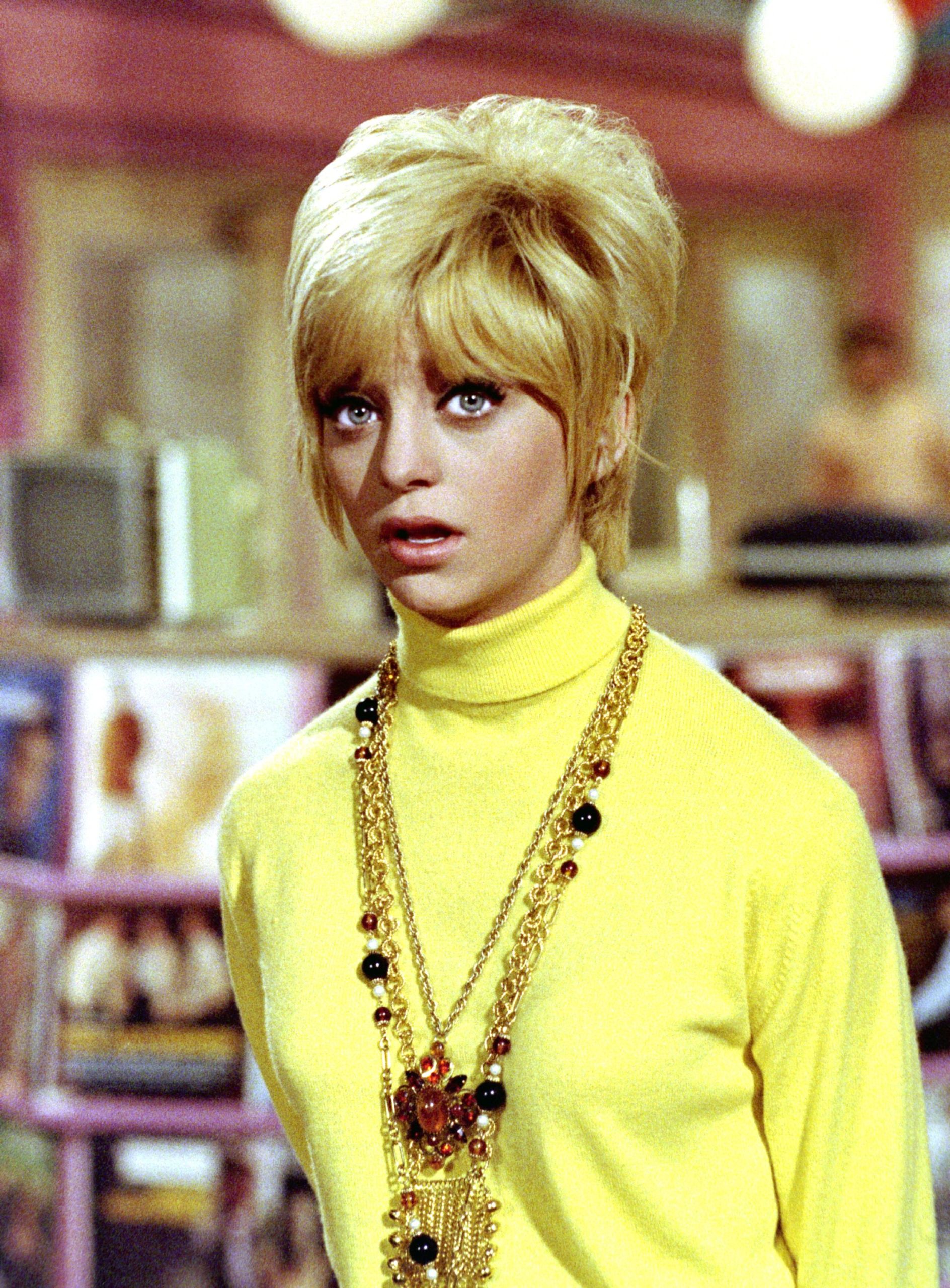
Some actresses have to work to convince us they’re free spirits. Goldie Hawn merely had to walk into the room.
In Cactus Flower, Hawn plays Toni Simmons, the young girlfriend of Walter Matthau’s Dr. Julian Winston, a Manhattan dentist who has spent their relationship avoiding marriage by telling Toni he already has a wife and three children. There is just one little problem with Julian’s carefully constructed story: none of them exist. When Toni finally decides she can no longer live with the guilt of breaking up a family, Julian suddenly realizes the lie he created to avoid commitment may cost him the woman he loves.
That’s a fairly dark starting point for a romantic comedy, particularly because Toni’s despair leads to a suicide attempt before her neighbor Igor rescues her. Yet Hawn brings such natural warmth to the character that Cactus Flower quickly finds its lighter rhythm. Toni is youthful, affectionate, spontaneous and wonderfully expressive. She doesn’t simply enter Julian’s rather buttoned-up world; she exposes just how unnecessarily complicated he has made it.
Naturally, Julian responds by making everything even more complicated. He persuades his loyal nurse, Stephanie Dickinson, played by Ingrid Bergman, to pose as his imaginary wife so Toni will believe the marriage is ending honorably. One lie requires another, and before long Toni is meeting a woman who doesn’t exist in a marriage that never happened while Julian desperately tries to keep everyone from comparing notes.
What makes Toni so appealing is that she isn’t nearly as naïve as Julian initially assumes. She may be younger, more emotional and considerably less cynical, but she has an instinctive kindness that the supposedly sophisticated adults around her have misplaced. When she meets Stephanie, Toni doesn’t regard her as a romantic obstacle to be defeated. She worries about her. She wants this woman she believes Julian is abandoning to be happy. Toni’s compassion becomes one of the quiet forces that begins rearranging everybody’s lives.
That’s where she fits so comfortably into the Manic Pixie Dream Girl lineage. Toni is exuberant and distinctly feminine, but her real influence comes from the way she forces Julian to reconsider the emotional shortcuts he has been taking. He has constructed an entire fictional family because telling the truth about his fear of commitment would require vulnerability. Toni doesn’t lecture him into changing. Loving her simply makes his old way of living increasingly impossible.
And then there is Goldie Hawn herself. Already familiar to television audiences from Rowan & Martin’s Laugh-In, Hawn made Toni her first major film role and walked away with the Academy Award and Golden Globe for Best Supporting Actress. It’s easy to see what audiences responded to. Her comic timing is effortless, but so is the vulnerability underneath it. Toni can seem delightfully scatterbrained one moment and unexpectedly perceptive the next.
There’s also a lovely bit of symmetry in Cactus Flower. Toni may be the obvious free spirit, but she isn’t the only woman who blossoms. As Julian’s deception unravels, Stephanie begins discovering a freer, more romantic version of herself as well. The movie’s title ultimately belongs to more than one character: put a little warmth in the right place and even something accustomed to protecting itself can flower.
Toni lands at number six because Goldie Hawn gives us an early version of the archetype without allowing her to become merely a bundle of quirks. She is bright, funny and wonderfully alive, but she also possesses the emotional sincerity Julian has spent years avoiding. He thinks he’s the worldly adult protecting himself from complications. Toni understands something much simpler—that loving someone should probably begin with telling them the truth.
More than three decades before Claire Colburn helped give the Manic Pixie Dream Girl a name, Goldie Hawn was already giving her a smile. And in Cactus Flower, that smile proved irresistible enough to win an Oscar.
🍿 Enjoying the Countdown?
We’re halfway there, with five unforgettable free spirits still to come. If you enjoy digging into movie history, revisiting great performances and debating where your favorites belong, subscribe to A Cute Film Addict for more rankings, features and The Daily Rewind. There’s always another great movie conversation waiting.
5. Madison — Splash (1984)
Played by Daryl Hannah

Sometimes the woman who changes your life walks through the door. Sometimes she washes ashore completely naked after swimming to Manhattan from Cape Cod. Splash has never been particularly interested in doing things the ordinary way.
Long before Allen Bauer knows her name, Madison has already saved his life. As a boy vacationing on Cape Cod, Allen falls into the ocean and encounters a mysterious young mermaid beneath the water. Years later, now played by Tom Hanks, Allen returns to the same place, falls into the sea again and is rescued by the same woman. Allen doesn’t recognize her, but Madison certainly remembers him.
What follows is one of the sweetest high-concept romances of the 1980s. Madison finds Allen’s wallet beneath the water, follows him to New York and arrives knowing almost nothing about the human world. She learns English by watching television, goes shopping with enthusiastic abandon and selects her name after seeing Madison Avenue. Allen, meanwhile, is understandably bewildered by the beautiful stranger who has suddenly appeared in his life and seems completely delighted to be there.
Daryl Hannah is the reason the fantasy works. Madison could easily have become a joke built around a beautiful woman misunderstanding ordinary human behavior. Hannah instead plays her curiosity without making her foolish. Everything is new to Madison, so everything deserves her attention. There’s something wonderfully refreshing about watching someone encounter the everyday world without having learned to be bored by it yet.
That quality makes her a natural Manic Pixie Dream Girl. Allen is unlucky in love, buried in work at the produce business he runs with his brother Freddie and increasingly convinced that lasting happiness may simply not be in the cards for him. Madison arrives with no interest in his carefully accumulated disappointments. She loves him openly, enjoys life instinctively and reminds him how different the world can look when you stop expecting it to let you down.
The lovely twist is that Madison is keeping a rather significant secret of her own. Water touching her legs transforms them back into a mermaid’s tail, and she knows her time on land with Allen is limited. Their romance therefore carries a little melancholy beneath all the comedy. Madison may seem like the magical woman who has arrived specifically to rescue Allen from loneliness, but she is also someone caught between two worlds and wondering whether there is a place where the two of them can actually belong together.
And she really does rescue him—twice. That’s an important reversal of the usual fairy-tale arrangement. Allen isn’t Prince Charming pulling a helpless maiden from danger. Madison is stronger in her world than he could ever hope to be, and when the truth about her identity is exposed, it is the supposedly civilized human world that becomes threatening. The fantasy isn’t that Allen can save Madison. It’s that he might finally become brave enough to follow her.
Hannah and Hanks give Splash the easygoing chemistry that keeps its stranger elements grounded. Hanks was still becoming the movie star audiences would eventually know so well, while Hannah gives Madison a combination of innocence, sensuality and confidence that never feels forced. Ron Howard surrounds them with broad comedy—especially John Candy as Allen’s irrepressible brother—but wisely lets the central romance remain sincere.
Splash became one of the defining romantic comedies of its decade, but Madison’s influence reaches beyond the movie itself. She even helped turn Madison into a popular girl’s name after the film jokingly had her choose it from a street sign. That’s a pretty remarkable legacy for a character who spends part of the movie wondering why humans put clothes on in the first place.
Madison swims into the number five spot because she captures the fantasy at the heart of the Manic Pixie Dream Girl better than almost anyone: the possibility that someone extraordinary might unexpectedly enter an ordinary life and reveal that happiness was there all along. Allen spends years looking for the woman who once saved him without realizing she was real. When Madison finally returns, she doesn’t just save him from the ocean. She gives him a reason to dive back in.
4. Claire Colburn — Elizabethtown (2005)
Played by Kirsten Dunst

Every character on this list can be described as a Manic Pixie Dream Girl. Claire Colburn is the reason we can describe them that way at all.
When Cameron Crowe’s Elizabethtown arrived in 2005, nobody knew that Kirsten Dunst’s relentlessly upbeat flight attendant would eventually lend her spirit to an entirely new piece of movie vocabulary. Two years later, film critic Nathan Rabin looked back at Claire and coined the term “Manic Pixie Dream Girl,” describing a particular kind of exuberant female character who enters the life of a brooding young man and teaches him to embrace its possibilities. The phrase stuck. Claire became its patron saint.
And she certainly makes an entrance worthy of the distinction. Orlando Bloom plays Drew Baylor, a shoe designer whose spectacular professional failure has cost his company nearly a billion dollars. Humiliated and suicidal, Drew is preparing to end his life when he learns that his father has died. He reluctantly boards a nearly empty flight to Kentucky to retrieve the body, and somewhere between Oregon and Louisville, Claire Colburn notices the lonely passenger sitting by himself.
Claire doesn’t merely offer Drew another drink and return to the galley. She talks. And talks. And talks some more. She draws him a map. She asks questions. She seems genuinely fascinated by this gloomy stranger who would probably prefer to disappear into his seat. Dunst gives Claire an almost inexhaustible supply of curiosity, and before Drew quite realizes what has happened, this woman has wandered straight through the emotional walls he has spent the opening of the movie constructing.
Their marathon telephone conversation after Drew reaches Kentucky is where Claire’s particular magic really begins to work. Two strangers spend the night talking about almost everything and nothing, eventually deciding that speaking over the phone isn’t enough. They meet as morning approaches and watch the sunrise together. It’s unabashedly romantic in that very Cameron Crowe way—the belief that the right song, the right person and the right moment can briefly make the whole messy business of being alive fall into place.
Claire could easily become unbearable in less capable hands. She is quirky, endlessly optimistic, unusually available and suspiciously well equipped to solve the emotional problems of a man she has only just met. That’s precisely what Rabin responded to when he created the term. Yet Dunst gives Claire little flashes of uncertainty beneath all that sunshine. Her smile sometimes feels less like proof that everything is wonderful than a decision to keep believing it might be.
That distinction makes Claire more interesting than the caricature her legacy sometimes suggests. She isn’t simply telling Drew that life is worth living. She senses that he needs room to discover it himself. Claire’s great contribution is the elaborate road trip she prepares for him after his father’s memorial—a handmade map accompanied by music, instructions and carefully chosen stops that turns Drew’s journey home into something closer to a rediscovery of America, his father and himself.
And really, what could be more Manic Pixie Dream Girl than that? Claire doesn’t just give the troubled man advice. She gives him a soundtrack.
There is a lovely irony in Claire’s place on this list. She didn’t invent the character type. Susan Vance was creating glorious chaos in David Huxley’s life in 1938. Sugar Kane, Holly Golightly, Annie Hall and plenty of others followed. What Claire did was make the pattern visible. Once Rabin put a name to what he saw in Elizabethtown, audiences and critics could suddenly look backward through decades of movie history and recognize variations of the same romantic fantasy.
Elizabethtown received a much cooler reception than many of the films surrounding it on this countdown, which is part of why Claire settles at number four rather than claiming the top spot. But the eye test matters here, too, and no ranking of Manic Pixie Dream Girls would feel quite complete without giving special consideration to the woman who inspired the phrase itself.
Drew Baylor boards an airplane believing his life is essentially over. Claire Colburn happens to be working the flight. By the time she is finished with him, there are maps to follow, songs to hear, places to see and another sunrise waiting somewhere down the road. Kirsten Dunst didn’t play the first Manic Pixie Dream Girl. She simply played the one who finally made us realize we’d been watching them all along.
🎬 Top Ten Manic Pixie Dream Girls — Movie Essentials
Bring the countdown home with movies featuring Annie Hall, Sugar Kane, Holly Golightly, Claire Colburn, Clementine and more — plus a few fun extras inspired by Breakfast at Tiffany’s.
🍿 Shop Movie EssentialsAs an Amazon Associate, I earn from qualifying purchases.
3. Holly Golightly — Breakfast at Tiffany’s (1961)
Played by Audrey Hepburn

There are movie stars, there are movie characters, and then there are those rare combinations of the two that become inseparable from our collective memory. Audrey Hepburn standing outside Tiffany & Co. in a black Givenchy dress, coffee and pastry in hand, is one of them. More than six decades later, you don’t even have to have seen Breakfast at Tiffany’s to recognize Holly Golightly.
Holly lives in a Manhattan apartment with a nameless orange cat, throws crowded parties, loses her keys and earns money accompanying wealthy men around town. She dreams of marrying rich and insists on keeping life pleasantly uncomplicated. Then struggling writer Paul Varjak, played by George Peppard, moves into her building. Holly promptly decides he reminds her of her brother Fred, starts calling him by that name and breezes into his life as though they’ve been friends for years.
On the surface, Holly seems almost custom-built for a term that wouldn’t exist for another four decades. She’s spontaneous, eccentric, feminine and effortlessly captivating. She takes Paul on an improvised day around New York, steals masks from a five-and-dime store with him and treats the ordinary rules governing everyone else’s behavior as gentle suggestions. Paul can’t help becoming fascinated. Neither can we.
But Audrey Hepburn understood something essential about Holly: all that sparkle is also armor. The sophisticated New York party girl is really Lulamae Barnes, a poor Texas girl who reinvented herself and has been running from anything capable of defining her ever since. Holly talks about being a wild thing who shouldn’t belong to anyone, yet much of the movie quietly reveals how badly she wants somewhere—and someone—to feel like home.
That contradiction is what lifts Holly above the simpler version of the Manic Pixie Dream Girl. She certainly changes Paul’s life, but she isn’t waiting around for the privilege. Paul is hardly uncomplicated himself, and their relationship gradually becomes a meeting of two people who have both found comfortable ways of avoiding uncomfortable truths. Holly hides behind glamorous independence. Paul hides behind a relationship that financially supports the writing career he isn’t really pursuing. Each recognizes something in the other that neither is particularly eager to admit about themselves.
Hepburn makes those contradictions feel effortless. She can be impossibly elegant at breakfast, hilariously overwhelmed at a party and heartbreakingly vulnerable when Holly’s carefully constructed world begins coming apart. Her performance earned an Academy Award nomination, while Henry Mancini and Johnny Mercer’s “Moon River”—sung with beautiful simplicity by Hepburn herself—gave Holly something even more revealing than dialogue. For a woman forever insisting she belongs nowhere, the song aches with longing for someplace beyond the next party.
Part of Holly’s enduring appeal is how completely Hepburn makes the character her own. Truman Capote created Holly on the page, but the woman who entered movie history belongs unmistakably to Hepburn. The oversized sunglasses, elegant Givenchy wardrobe and effortless sophistication became iconic, yet it’s the little cracks in that polished exterior that make her memorable. Beneath all that glamour is a woman still trying to decide who she wants to be—and whether letting someone truly know her might be worth the risk.
And what a cultural legacy followed. The Givenchy wardrobe became iconic. “Moon River” became a standard. Tiffany’s became permanently intertwined with the film’s romantic image of New York. Most importantly for this list, Holly became one of cinema’s defining free spirits long before anyone thought to categorize women like her. She is simultaneously worldly and wide-eyed, confident and frightened, independent and desperately afraid of being alone.
That last quality becomes especially important in the rain-soaked finale. Paul finally challenges Holly’s insistence that refusing to belong to anyone makes her free. The moment works because the movie isn’t really asking Holly to surrender her independence to a man. It’s asking whether protecting yourself from every possibility of loss eventually means protecting yourself from love as well. Somewhere between Paul, Holly and one very wet orange cat, the fantasy finally gives way to something warmer.
Holly Golightly takes the number three spot because few characters have ever made contradiction look so enchanting. She has all the ingredients of the Manic Pixie Dream Girl—the spontaneity, femininity, eccentricity and ability to transform the man who wanders into her orbit—but Audrey Hepburn gives us enough glimpses behind the sunglasses to see the vulnerable woman underneath. Holly spends much of Breakfast at Tiffany’s searching for a place where she can feel as safe as she does standing outside that famous jewelry store. By the end, she may finally have found it.
2. Sugar Kane — Some Like It Hot (1959)
Played by Marilyn Monroe

Some characters enter a movie and immediately seem to raise the temperature a few degrees. Sugar Kane doesn’t even have to say anything. Marilyn Monroe hurries down a train platform in Some Like It Hot, ukulele case in hand, and before Jerry can quite believe what he’s seeing, he offers perhaps the most succinct assessment possible: “Look at that! Look how she moves!” Billy Wilder knows exactly what he has in Monroe, and so does the audience.
Sugar is the singer and ukulele player for Sweet Sue and Her Society Syncopators, an all-female band traveling to Florida. Joe and Jerry, played by Tony Curtis and Jack Lemmon, desperately need to get out of Chicago after witnessing the St. Valentine’s Day Massacre, so they disguise themselves as women, become Josephine and Daphne, and join the band. Avoiding gangsters suddenly seems like the easy part. Now they have to survive close quarters with Sugar without revealing who they really are.
From the beginning, Sugar is everything these two nervous fugitives are not. She’s warm, spontaneous, trusting and wonderfully open about herself. She sneaks bourbon despite band rules, climbs into Josephine and Daphne’s berth for an impromptu party and confesses that she has a weakness for saxophone players—the very sort of men she has promised herself she will stop falling for. Sugar knows her romantic history isn’t particularly encouraging. Hope keeps getting the better of her anyway.
That’s an important part of what Monroe brings to the character. Sugar could have been little more than the gorgeous woman at the center of an elaborate farce, but Monroe gives her a sweetness that makes the name feel appropriate. She is funny without seeming to know she’s funny, sexy without appearing calculating and vulnerable without ever asking us to pity her. Men see Marilyn Monroe when Sugar walks into the room. Monroe makes sure we see Sugar Kane.
Joe certainly sees an opportunity. Once the band reaches Florida and Sugar admits she dreams of marrying a millionaire, Joe creates yet another identity: Junior, the supposedly wealthy heir to Shell Oil. What follows aboard a borrowed yacht is one of the movie’s funniest reversals. Joe pretends to be emotionally incapable of responding to women, confident that Sugar will take the bait. She does—but with such determination and sincerity that the con man quickly discovers he’s the one losing control of the situation.
In that sense, Sugar makes a fascinating early Manic Pixie Dream Girl. She isn’t there to drag Joe on some carefully curated adventure or teach him to dance in the rain. Her effect is subtler. Joe begins the movie as a charming opportunist who lies almost as naturally as he breathes. Sugar’s openness makes those lies increasingly uncomfortable. He starts by pretending to be the man she thinks she wants and eventually realizes he’d rather become someone worthy of the woman she actually is.
Monroe’s performance is all the more remarkable because Sugar carries sadness underneath the comedy. “I’m Through with Love” isn’t merely another nightclub number. By then, Sugar believes she has once again trusted the wrong man, and Monroe lets the disappointment settle quietly across her face. The exuberant girl who has spent the movie hoping the next romance will finally be different suddenly looks very tired of having her heart broken.
Some Like It Hot surrounds that vulnerability with one of the great comic machines in movie history. Wilder keeps gangsters, disguises, romantic deceptions and mistaken identities spinning until they all converge in a finale that barely stops long enough to breathe. Curtis and Lemmon are terrific, and Monroe somehow finds her own rhythm amid all that glorious chaos. The film earned six Academy Award nominations, while Monroe won the Golden Globe for Best Actress in a Comedy or Musical for playing Sugar.
And then there is the Marilyn Monroe factor. Plenty of actresses have played charming free spirits, but few have ever possessed Monroe’s peculiar combination of glamour and vulnerability. Sugar can stop a room simply by entering it, yet she never seems entirely convinced of her own power. That tension makes her enormously likable. Beneath one of the most famous faces in movie history is a woman who keeps believing happiness might be waiting around the next corner.
Sugar Kane reaches number two because she embodies so much of what makes this archetype irresistible without ever feeling like an archetype. She’s exuberant, feminine, impulsive and capable of changing the emotional direction of the man who falls for her, but Monroe gives Sugar something even more important: a heart. Joe may spend most of Some Like It Hot pretending to be someone else. Sugar, wonderfully and imperfectly, is always herself. And nobody’s perfect.
1. Annie Hall — Annie Hall (1977)
Played by Diane Keaton

“La-dee-da, la-dee-da.”
Sometimes a performance becomes so iconic that it’s difficult to tell where the character ends and the actress begins. Annie Hall feels that way. The oversized men’s shirts, loose trousers, vests, ties, hats, nervous little gestures and that wonderfully distinctive way of speaking all became inseparable from Diane Keaton. Plenty of women on this list changed the lives of the men who loved them. Annie changed the movies around her.
Alvy Singer, played by Woody Allen, is a successful New York comedian who can find something wrong with almost anything. He’s intelligent, funny, neurotic, pessimistic and extraordinarily gifted at turning his insecurities into everybody else’s problem. When he meets Annie, she initially seems like his opposite: Midwestern, spontaneous, slightly awkward and capable of enjoying life without first conducting an exhaustive analysis of why she probably shouldn’t.
Their early scenes together remain some of the movie’s most charming. Annie nervously invites Alvy up for a glass of wine after a tennis match, and the subtitles reveal the anxious thoughts hiding beneath their casual conversation. She says one thing while wondering whether she sounds stupid; Alvy answers while worrying about what she thinks of him. The joke is funny because the movie understands something reassuringly universal: even people who seem charming and confident are often making it up as they go along.
Annie’s appeal, though, goes far beyond quirkiness. She sings. She takes photographs. She uses expressions Alvy finds peculiar. She embraces experiences he instinctively distrusts. Yet Keaton never plays her as a magical creature sent into the world to repair a complicated man. Annie has insecurities of her own, and over the course of the film she begins confronting them. The shy woman uncertain about performing in a nightclub gradually discovers confidence, ambition and a life that doesn’t have to be organized around Alvy Singer.
That’s where Annie becomes such an important variation on the Manic Pixie Dream Girl. Alvy initially behaves as though he’s the sophisticated one. He recommends books, encourages Annie to take classes and treats her intellectual development almost like a personal improvement project. But something wonderful happens along the way: Annie actually grows. The woman Alvy thinks he’s shaping becomes increasingly comfortable deciding what she wants for herself.
And Alvy isn’t entirely prepared for that.
That’s one reason their relationship still feels recognizable. Annie Hall isn’t really about finding the perfect person who fixes everything. It’s about meeting someone at a particular moment in your life, changing because of them and discovering that change doesn’t necessarily guarantee forever. Annie brings warmth and spontaneity into Alvy’s tightly wound existence, but Alvy influences her as well. Their relationship matters precisely because neither emerges from it quite the same person who entered.
Diane Keaton makes that evolution seem wonderfully natural. Her Annie is funny without delivering jokes like punchlines, stylish without appearing to know she’s creating a style and vulnerable without ever becoming helpless. Keaton won the Academy Award and Golden Globe for the performance, while Annie Hall won four Oscars, including Best Picture, Best Director and Best Original Screenplay. The film became one of the defining romantic comedies of its era, and Keaton became its unmistakable heart.
Even Annie’s famous wardrobe tells us something about why the character works. Her loose menswear-inspired clothes shouldn’t fit the traditional idea of girlish femininity at all, yet on Keaton they somehow become uniquely feminine because they belong so completely to Annie. She isn’t dressing to fulfill somebody else’s idea of the dream girl. She’s simply Annie Hall. That confidence—or sometimes the charming attempt to find it—is far more appealing than perfection could ever be.
And perhaps that’s why Annie belongs at number one. The weaker version of the Manic Pixie Dream Girl exists primarily to teach a man how to live. Annie does that for Alvy, but then she keeps going. She develops tastes he doesn’t share, pursues opportunities he doesn’t entirely understand and eventually builds a life that doesn’t include him. Alvy can’t freeze her at the moment when she was exactly what he needed. Annie gets to become what she needs.
The ending understands that some great movie romances don’t need happily ever after. Alvy and Annie meet again after their lives have moved in different directions, share a meal and part warmly. He remembers their relationship not as a failure but as something beautiful that happened. His closing joke compares relationships to a man who keeps his brother around despite believing he’s a chicken because “we need the eggs.” Love can be irrational, frustrating and temporary—and still be worth having.
That’s Annie Hall. She enters the life of an anxious man and makes it bigger, warmer and more interesting, only to eventually discover that her own life deserves the same attention. Nearly three decades before Claire Colburn inspired a critic to give the Manic Pixie Dream Girl her name, Diane Keaton gave the archetype something even better: independence, contradiction and a life beyond the man who fell in love with her.
La-dee-da, indeed.
🎬 Top Ten Manic Pixie Dream Girls — Movie Essentials
Bring the countdown home with movies featuring Annie Hall, Sugar Kane, Holly Golightly, Claire Colburn, Clementine and more — plus a few fun extras inspired by Breakfast at Tiffany’s.
🍿 Shop Movie EssentialsAs an Amazon Associate, I earn from qualifying purchases.
The Girl Was There All Along
The funny thing about the Manic Pixie Dream Girl is that once you know what you’re looking for, you start seeing her everywhere.
She was there in 1938, when Susan Vance turned David Huxley’s carefully ordered life into a glorious mess involving a dinosaur bone and a leopard. She was there when Sugar Kane boarded a train to Florida, when Holly Golightly stood outside Tiffany’s with breakfast in hand, and when Annie Hall wandered into Alvy Singer’s life with a “la-dee-da” and eventually discovered a life beyond him.
Nobody called these women Manic Pixie Dream Girls. They were simply memorable movie characters.
Then Claire Colburn came along.
When Nathan Rabin coined the term after seeing Kirsten Dunst in Elizabethtown, he gave us a wonderfully catchy description for something movies had been doing for generations. Suddenly, that exuberant, eccentric woman who crashes into the life of an emotionally stalled man had a name. And as names tend to do, it made us look backward and recognize a pattern that had been hiding in plain sight.
The criticism of the archetype is understandable. A woman who exists solely to rescue a troubled man can become less of a character than a fantasy. Give her some quirky clothes, unusual hobbies, an infectious laugh and no discernible ambitions beyond improving his life, and eventually we’re going to wonder what she does when he isn’t around.
But the best characters on this list demonstrate why the idea has endured. Clementine explicitly refuses to become Joel’s salvation. Holly’s sophistication conceals a woman searching for somewhere to belong. Sugar’s sunny romanticism carries the scars of repeatedly choosing the wrong men. Claire’s optimism becomes a lifeline for someone who has forgotten how to see beyond his failures. And Annie grows beyond the man who initially believes he’s helping her grow.
Maybe that’s the difference between a trope and a great character.
The trope gives us the recognizable ingredients. A great actress and a thoughtful screenplay give us the person underneath them.
That’s ultimately what I love about these ten performances. Goldie Hawn makes Toni’s exuberance feel effortless. Daryl Hannah finds innocence without making Madison naïve. Kate Winslet lets us see the exhaustion underneath Clementine’s colorful hair. Audrey Hepburn finds loneliness behind Holly’s sunglasses. Marilyn Monroe gives Sugar a vulnerability every bit as memorable as her glamour. And Diane Keaton allows Annie Hall to be funny, insecure, independent, contradictory and completely herself.
The Manic Pixie Dream Girl may enter the story to remind someone else that life is worth living. The unforgettable ones make us feel it, too.
So now I’ll turn the ranking over to you. Who is your favorite Manic Pixie Dream Girl—and who did I leave off the list?
As always, there are plenty more movies waiting for us.
Keep Watching Great Movies.
🍿 Ready for a Manic Pixie Dream Girl Movie Marathon?
Save all ten films with my Letterboxd companion list.
🎬 Let’s Keep Talking Movies
If you enjoyed counting down the greatest Manic Pixie Dream Girls in movie history, there’s plenty more waiting at A Cute Film Addict. Subscribe for more Top Ten rankings, movie features, The Daily Rewind and plenty of reasons to add another film to your watchlist. Because the best part of loving movies is always finding the next one worth talking about.
🎬 More to Explore
🎬
Top Ten Manic Pixie Dream Girls — Movie Essentials
Shop the movies from the countdown, along with a few fun extras inspired by Holly Golightly and Breakfast at Tiffany’s.
🎞️
Top Ten Manic Pixie Dream Girls — Letterboxd Companion List
Save all ten films in one place and follow the complete ranking on Letterboxd.
⭐
My Personal Movie Top Ten
Ten movies that helped shape my love of cinema, from Fight Club to The Godfather.
🏆
The 100 Greatest Movies Ever Made
Continue exploring with my ranked celebration of 100 essential films from across movie history.


Leave a Reply